Callback Verification: How to Stop Impersonation Attacks
Callback verification breaks the trust chain by forcing callers to prove identity through a separate, verified communication channel rather than accepting their word.
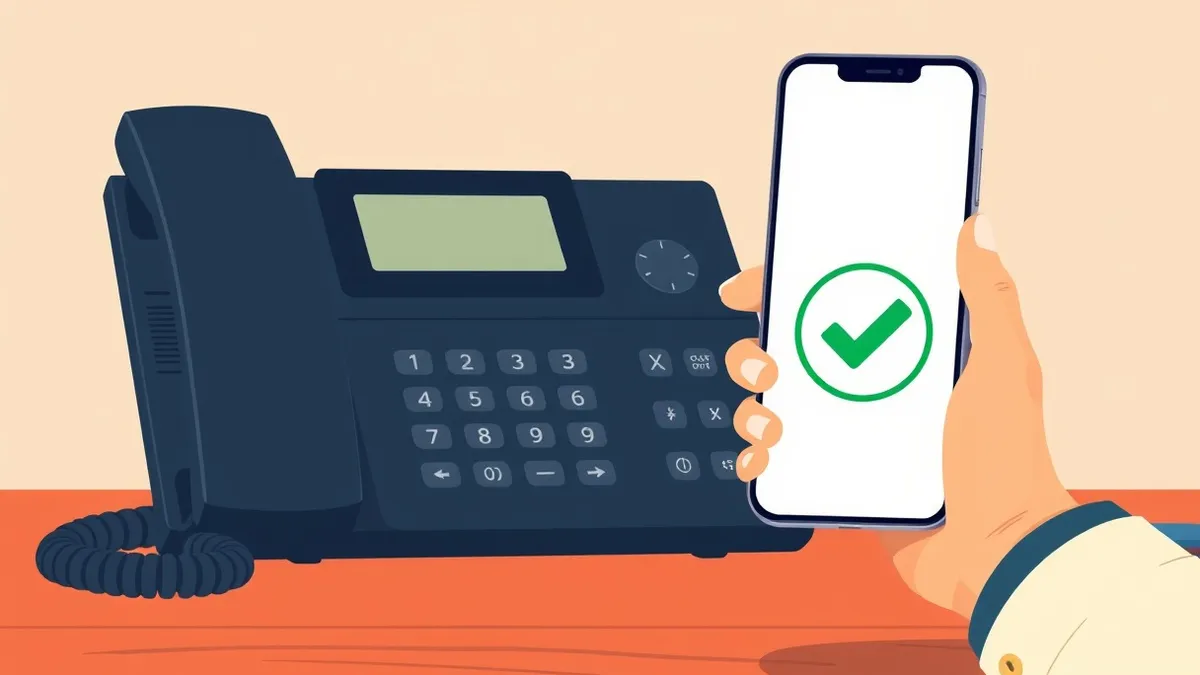
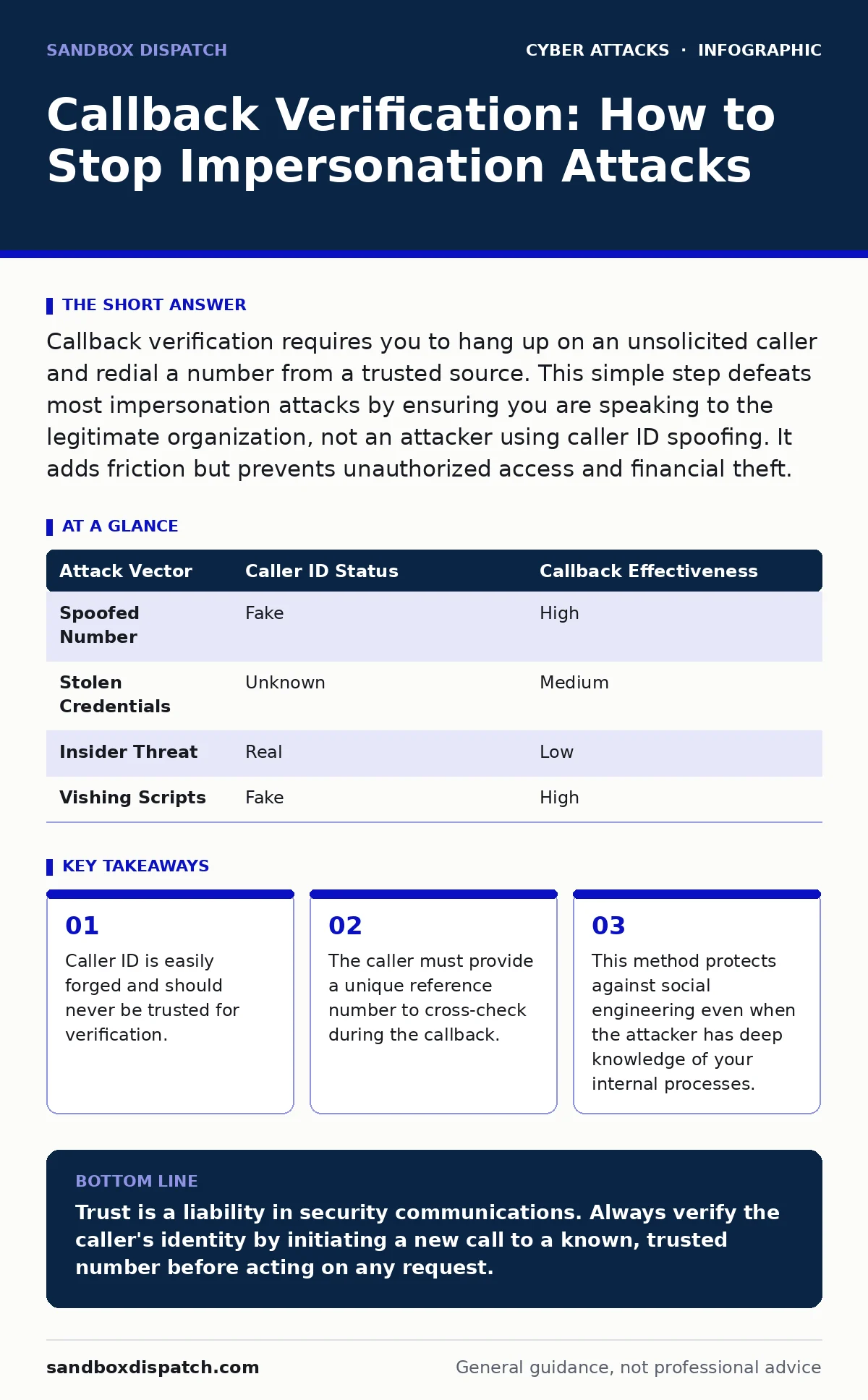
Callback verification requires you to hang up on an unsolicited caller and redial a number from a trusted source. This simple step defeats most impersonation attacks by ensuring you are speaking to the legitimate organization, not an attacker using caller ID spoofing. It adds friction but prevents unauthorized access and financial theft.
Why does caller ID fail as a security control?
Caller ID displays the number the caller claims to be using, not necessarily their actual originating number. Attackers use Voice over IP services to set this display to any sequence of digits they choose. You cannot trust the screen on your phone or desk unit to indicate who is on the other end. This falsification allows criminals to mimic your bank, IT department, or government agencies with perfect accuracy.
How do I execute a callback verification correctly?
You must end the current call immediately and initiate a new one using a number you already trust. Do not ask the caller for a number to call back. Do not use the "redial" button, which repeats the last received number. Instead, find the official support number on your bill, your company intranet, or a previously saved contact. This ensures the new call originates from your device to a known, verified destination.
What information must I have before hanging up?
You need a unique transaction identifier or reference code from the caller before you disconnect. Without this, you cannot prove to the legitimate organization that you are discussing the same request. Ask for a case number, ticket ID, or specific order reference. Write it down. When you call the verified number, you cite this code to link your callback to the original inquiry. This creates a closed loop of verification that an attacker cannot easily replicate.
Can an attacker anticipate my callback attempt?
An attacker can predict that you will verify the call, but they cannot easily intercept the new connection. Suppose you call your bank's official number. The attacker remains on the first channel. They cannot hear your conversation with the bank unless they have already compromised your account session. However, they might try to call you again immediately to create confusion. Stick to the single, verified channel you initiated. Ignore any subsequent incoming calls from "the bank" during this process.
Does this protect against insider threats?
Callback verification helps, but it is not a silver bullet against malicious insiders. If a colleague with legitimate credentials tries to trick you into bypassing security, the official support line may confirm their identity. The method assumes the organization's directory and support staff are trustworthy. It primarily defends against external actors who lack authorized access. For insider risks, you need stricter least privilege policies and audit logs. See our guide on tailgating for physical and logical access controls.
See also: QR Code Phishing: How to Spot Fake Scans and Secure Inputs
What if the caller threatens escalation or urgency?
Urgency is the primary lever attackers use to bypass your critical thinking. They claim your account will be locked, a server will go down, or a legal deadline will pass. Hanging up feels risky because of this pressure. However, the cost of a false negative (ignoring a real emergency) is usually lower than the cost of a false positive (falling for a scam). Legitimate organizations expect verification. They will not revoke your access because you took two minutes to call back from a trusted number.
How does this interact with automated systems?
Many organizations use Interactive Voice Response systems that require complex menu navigation. Attackers sometimes use AI voice bots that can mimic these menus. If you hang up and call back, you interact with the real IVR. This resets the session. The attacker loses their position in the queue or menu tree. You start fresh with the legitimate system. This friction is a feature, not a bug. It forces the attacker to waste resources for every attempt.
| Attack Vector | Caller ID Status | Callback Effectiveness |
|---|---|---|
| Spoofed Number | Fake | High |
| Stolen Credentials | Unknown | Medium |
| Insider Threat | Real | Low |
| Vishing Scripts | Fake | High |
Why not just use multi-factor authentication?
Multi-factor authentication adds a layer, but it does not replace the need for identity verification in voice channels. An attacker might have stolen your credentials and is waiting for you to approve an MFA push. By calling back, you are verifying the source of the request, not just your identity. This is particularly relevant when dealing with tech support scams where the attacker guides you to disable protections. MFA assumes the request is legitimate; callback verification questions the legitimacy of the request itself.
What are the operational costs of this practice?
The main cost is time. Every verification adds minutes to routine interactions. Support teams may face higher call volumes as users verify incoming requests. You must balance security with productivity. Do not require callback verification for low-risk internal chats. Reserve it for requests involving financial transfers, password resets, or privilege escalation. The trade-off is clear: slightly slower operations in exchange for significantly reduced risk of catastrophic error.
How does this relate to digital communications?
The same principle applies to email and instant messaging. If you receive a request for sensitive data, verify the sender through a different channel. This mirrors the defense against email spoofing. In voice, the channel is the phone line. In digital, it is the email header or a secondary chat platform. The core mechanism remains: never trust the channel that delivered the request. Always validate the identity through an independent, out-of-band method. This approach also mitigates risks associated with login alerts being ignored or spoofed.
Key takeaways
- Caller ID is easily forged and should never be trusted for verification.
- The caller must provide a unique reference number to cross-check during the callback.
- This method protects against social engineering even when the attacker has deep knowledge of your internal processes.
Trust is a liability in security communications. Always verify the caller's identity by initiating a new call to a known, trusted number before acting on any request.
Frequently asked questions
What if the legitimate support line is busy?
Wait and try again later. Do not accept alternative numbers from the original caller. Legitimate emergencies can wait a few minutes; financial theft cannot be undone.
Does this work for SMS messages?
Yes. Treat unsolicited texts as potential scams. Do not click links. Call the organization using a number from your saved contacts or their official website.
Can I use a colleague to verify for me?
Only if that colleague has independently verified the request. If they simply forward the call, you gain nothing. The verification must come from a trusted, external source.
What if the caller claims they are calling from a mobile number?
Mobile numbers are just as easy to spoof as landlines. The origin of the call does not change the risk. Always hang up and dial the official number yourself.
How this guide was produced: written by the Sandbox Dispatch editorial team with AI assistance, checked against the public references listed below, and reviewed when the facts change. See our editorial policy or report an error.