Data Privacy vs Security: How to Choose the Right Control
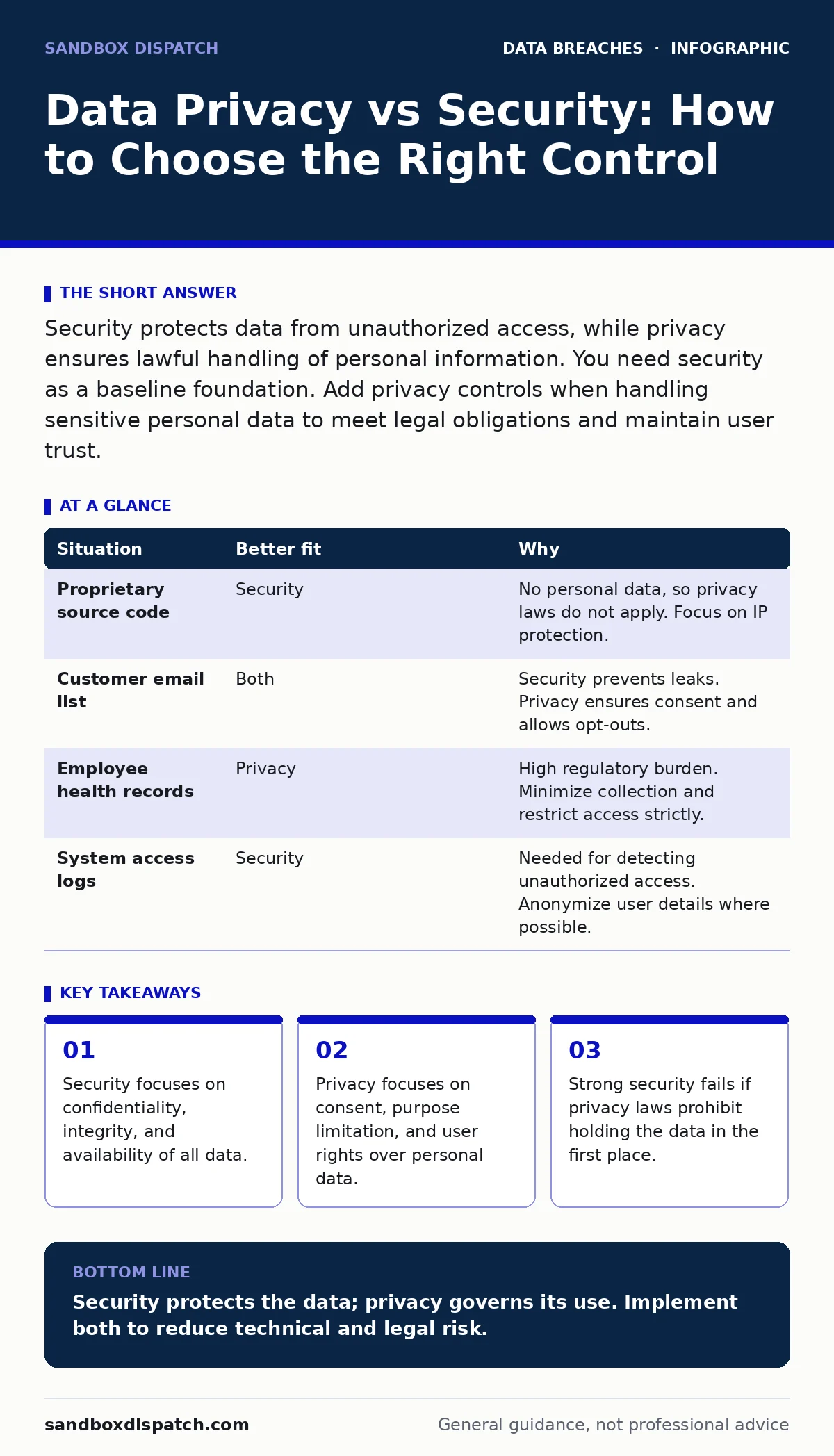
You need security to keep data out of wrong hands, but you need privacy controls to legally process what you keep. They solve different problems.
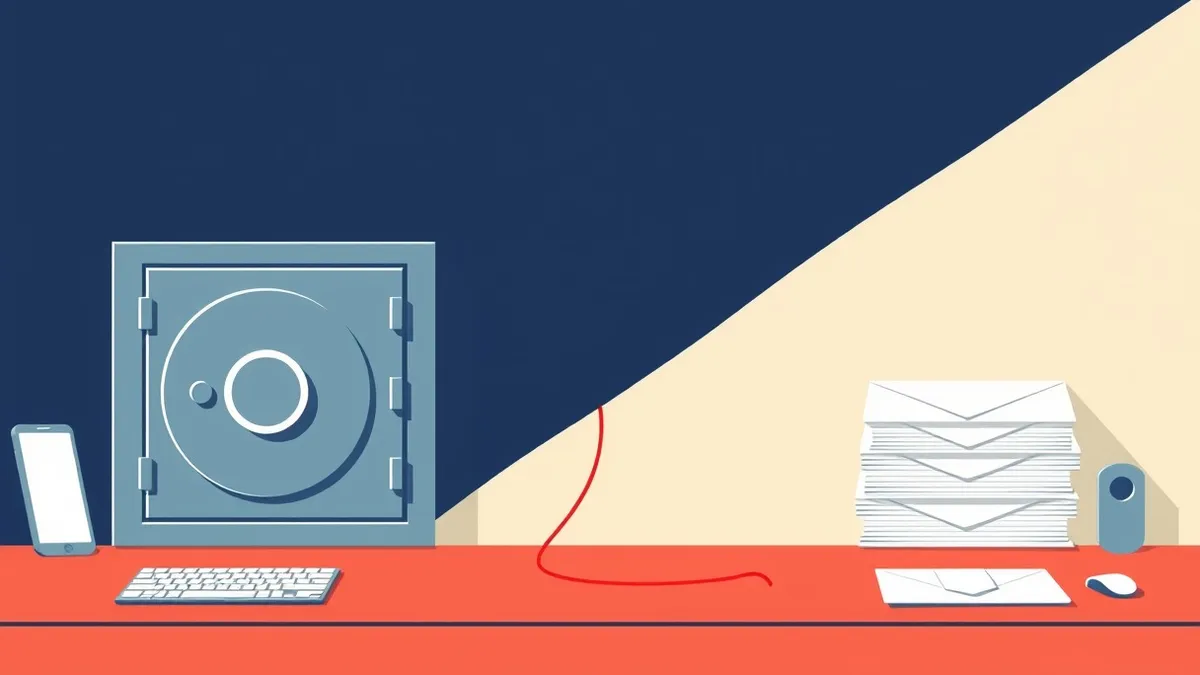
Security protects data from unauthorized access, while privacy ensures lawful handling of personal information. You need security as a baseline foundation. Add privacy controls when handling sensitive personal data to meet legal obligations and maintain user trust.
Who Owns the Data You Hold?
Security treats data as an asset to be protected. Privacy treats data as a liability to be managed. If you store system logs or proprietary code, security is your primary concern. You want to prevent unauthorized access and ensure the data remains intact.
If you store customer names, email addresses, or health records, privacy becomes equally critical. These are forms of sensitive personal data. You must define why you hold this information and whether you have the right to keep it. A breach of security is a technical failure. A breach of privacy is often a legal and reputational one.
What Happens If the Data Is Exposed?
Imagine a server is compromised. If it contains encrypted payment tokens, the exposure is minimal. Security measures like encryption at rest and in transit mitigate the risk. The data is useless to the attacker without the decryption keys.
Suppose the same server holds unencrypted social security numbers. The exposure is severe. Even with perfect security, the mere possession of this data creates liability. You must ask if you can anonymize or pseudonymize the data. Pseudonymization replaces identifying fields with artificial identifiers, reducing the privacy risk while maintaining analytical utility. This shifts the problem from privacy to security, making the remaining data harder to link to individuals.
How Long Do You Need to Keep It?
Security requires you to protect data as long as it exists on your infrastructure. Privacy requires you to delete data when it is no longer necessary. This is the core conflict. Holding data longer increases the attack surface for security teams. It also increases compliance risk for privacy teams.
You need clear data retention policies. These policies define how long you keep each type of data. Once the retention period expires, the data must be securely deleted. Secure deletion ensures the data cannot be recovered. Without this step, you are holding ghost data that serves no business purpose but poses a constant security threat.
Can You Prove Your Handling Is Correct?
Security relies on audit logging to detect and investigate incidents. Privacy relies on those same logs to prove compliance with user rights. When a user requests deletion, you must prove the data is gone. When a user requests access, you must prove you have given them all their data.
This is where your data inventory and mapping becomes vital. You cannot manage what you cannot see. If you do not know where personal data resides, you cannot secure it effectively or delete it upon request. A comprehensive map allows you to apply security controls consistently and respond to privacy requests accurately.
| Situation | Better fit | Why |
|---|---|---|
| Proprietary source code | Security | No personal data, so privacy laws do not apply. Focus on IP protection. |
| Customer email list | Both | Security prevents leaks. Privacy ensures consent and allows opt-outs. |
| Employee health records | Privacy | High regulatory burden. Minimize collection and restrict access strictly. |
| System access logs | Security | Needed for detecting unauthorized access. Anonymize user details where possible. |
Using Both Together
Security and privacy are not mutually exclusive. They are interdependent. Weak security makes privacy promises impossible to keep. Poor privacy practices create unnecessary security risks by accumulating data you do not need.
Start with security. Ensure your systems are hardened against unauthorized access. Then layer privacy on top. Implement consent management and purpose limitation. Use privacy by design principles to minimize data collection. This reduces the amount of data you need to secure.
See also: What Is Cyber Threat Intelligence: Definition and Practical Use
The Edge Cases
There are situations where standard advice fails. Suppose you need to share data with a third-party vendor. Security requires a secure channel. Privacy requires a data processing agreement. If the vendor is in a different jurisdiction, the legal framework changes. You must ensure the transfer mechanism is valid.
Another edge case is employee offboarding security. When an employee leaves, you revoke their access (security). But you must also ensure they have not exfiltrated personal data (privacy). This requires monitoring and clear policies on data handling.
Making the Decision
You do not choose between privacy and security. You choose the right balance for your specific context. Ask yourself: Is this data personal? If yes, privacy is non-negotiable. Is this data valuable? If yes, security is non-negotiable.
If the answer is yes to both, you must implement both. Do not treat privacy as a checkbox exercise. It is a continuous process of managing risk. Regularly review your data flows. Update your controls as regulations change. Stay informed about emerging threats and legal requirements.
Key takeaways
- Security focuses on confidentiality, integrity, and availability of all data.
- Privacy focuses on consent, purpose limitation, and user rights over personal data.
- Strong security fails if privacy laws prohibit holding the data in the first place.
Security protects the data; privacy governs its use. Implement both to reduce technical and legal risk.
Frequently asked questions
Does encryption solve privacy compliance?
No. Encryption is a security measure. Privacy compliance requires lawful basis for processing, transparency, and respecting user rights, which encryption does not provide.
How do I handle tax identity theft risks?
Secure financial data with strong access controls and encryption. Limit access to authorized personnel only. Monitor for unusual activity that may indicate fraud.
What if I lose a device with personal data?
Report the loss immediately. Remotely wipe the device if possible. Use lost and stolen devices protocols to mitigate exposure. Notify affected users if required by law.
Can I use audit logging for privacy compliance?
Yes. Logs prove when data was accessed or modified. They help demonstrate compliance with user rights requests and detect unauthorized handling of personal data.
How this guide was produced: written by the Sandbox Dispatch editorial team with AI assistance, checked against the public references listed below, and reviewed when the facts change. See our editorial policy or report an error.